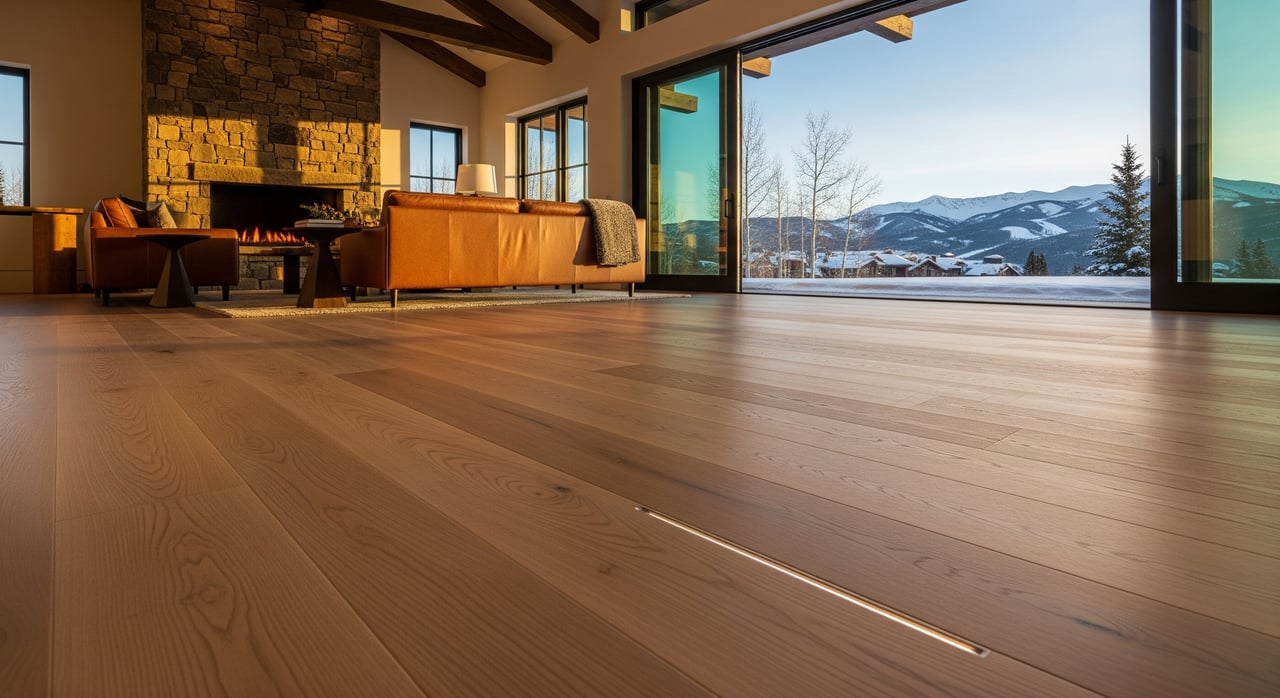
Stone floors feel amazing after a ski day, but at 8,000 feet you also want a heating system that feels warm, reacts when you need it, and works with the mountain climate. If you are weighing radiant heat against forced air for a Vail Village home, you are asking the right question. In this guide, you will learn how elevation, winter temperatures, fuel access, installation, and rebates shape the choice. You will also see where hybrid setups shine so you can invest with confidence. Let’s dive in.
What 8,000 feet means for heating
Winter in Vail is long and cold, with mean January lows near 6 °F and very high heating demand, according to NOAA climate normals for Vail. That climate pushes your system hard for many months.
Thin air at elevation changes equipment behavior. Lower air density can reduce fan mass flow and coil heat transfer, so capacity and performance can shift and sometimes need manufacturer adjustments. See this overview of altitude effects on HVAC performance.
Gas furnaces and boilers are especially sensitive to elevation. Many models require high-altitude conversion and an input derate when installed around 8,000 feet. Installers should follow the specific model’s guidance, as summarized in this note on high-altitude furnace modifications.
Radiant heating in Vail homes
Why radiant stands out
- Radiant hydronic floors move heat with water, which is very efficient for distribution. The Department of Energy notes radiant systems can be more efficient than baseboards and often more efficient than forced air because they eliminate ducts. Learn more about radiant heating basics and benefits.
- You feel warmth at the surface, so comfort is high with even room temperatures and quiet operation.
- Tile and stone floors common in ski homes are ideal emitters. Radiant also pairs well with low-temperature heat sources such as condensing boilers and heat pumps.
Where radiant needs planning
- Response time is slower. High thermal mass means it is not optimal if you want quick temperature swings, which can matter for intermittently used vacation properties. The DOE notes this slower response in its radiant heating guidance.
- Whole-home retrofits can be invasive and higher cost, especially if you need to open floors or raise floor heights. For scope and cost context, see these published notes on heated floor installation options.
- Floor coverings influence output. Thick carpet and some woods insulate the heat, while tile or stone perform best.
Forced air that fits the mountains
Furnaces and boilers
- Forced air delivers fast temperature changes and can be simpler if ductwork already exists.
- At Vail elevation, gas appliances typically need high-altitude conversion and a capacity derate as directed by the manufacturer. Following that guidance helps ensure safe, efficient operation.
- Ducts can also serve filtration and whole-home ventilation when designed for that purpose. Just be mindful that duct leakage and poor insulation reduce delivered heat.
Heat pumps at high altitude
- Modern cold-climate air-source heat pumps have been validated to perform well in cold regions, with efficiency falling as temperatures drop. See NREL’s field validation of cold-climate heat pumps.
- Altitude can modestly affect fan and coil performance, so proper sizing and siting are important.
- Incentives can be significant. Holy Cross Energy offers rebates for cold-climate heat pumps and electrification, and the Colorado Energy Office provides state home energy rebates that can improve project economics.
Which system fits your Vail Village home?
- Fuel availability: Confirm whether pipeline natural gas is at your specific property. Service varies by community, and some locations use propane. A local contact point is listed for Black Hills Energy’s regional gas service.
- Building and finishes: Slabs and tile or stone floors favor radiant performance. Suspended floors and thick carpet reduce output and can complicate retrofits.
- Occupancy pattern: If you need rapid warm up for short stays, forced air or a hybrid can help. If you prefer steady, quiet comfort, radiant excels.
- Comfort priorities: If underfoot warmth and silent operation top your list, radiant is compelling. If integrated ventilation and fast response matter most, forced air or a ducted heat pump may be better.
Smart hybrid solutions
Many mountain homes blend systems for the best of both. A common pattern is hydronic radiant in main living areas and baths for luxurious, even warmth, plus a ducted or ductless heat pump for bedrooms, rapid response, and summer cooling. Add balanced ventilation with heat recovery for fresh air and winter efficiency.
Installation, ventilation, and winter details
- Ventilation: Radiant systems do not move fresh air on their own. Modern tight homes should include balanced mechanical ventilation per ASHRAE 62.2. The DOE explains why code-compliant ventilation and IAQ matter in low-leakage homes.
- Freeze and snow: Plan for condensate drainage and freeze protection on exterior equipment, protect piping for snow-melt areas, and confirm defrost controls are set for local conditions.
- Altitude setup: For gas equipment, verify high-altitude conversion and the derate in writing. For heat pumps, confirm the 99 percent design outdoor temperature is used for sizing and that elevation effects are considered.
Quick homeowner checklist
- Define your comfort goals by room. Prioritize spaces that benefit most from radiant, such as tile or stone floors.
- Verify fuel and utility options at the parcel, including service and rebates.
- Ask heat pump installers for cold-climate models sized to Vail’s design temperature and for controls that limit backup heat use.
- Ask gas installers to provide the manufacturer’s high-altitude procedure and to note the expected input derate.
- Plan balanced ventilation with heat recovery when using radiant as primary heat.
- Get two or three local quotes that include controls, zoning, and winterization details.
Ready to talk through options for a specific Vail Village home or condo and how they impact comfort, ownership costs, and resale? Reach out to Gardner & Gardner Resort Real Estate for local, step-by-step guidance.
FAQs
What makes Vail’s climate hard on heating systems?
- Long, cold winters with very high heating demand and frequent freeze-thaw cycles mean your system runs a lot and must be sized and installed for reliability.
Do heat pumps really work at around 8,000 feet?
- Yes, modern cold-climate air-source models have strong field results in cold regions, though efficiency drops at the lowest temperatures and proper sizing and controls are key.
Do gas furnaces need changes at this elevation?
- In many cases, yes. Manufacturers often require high-altitude conversion and an input derate around 8,000 feet to ensure safe, efficient combustion.
Is radiant floor heat good under tile and stone?
- Yes. Hard surfaces like tile and stone transfer heat well, which boosts comfort and performance for radiant systems.
If I choose radiant, how do I get fresh air?
- Include a dedicated mechanical ventilation system, often a heat recovery ventilator or energy recovery ventilator, to deliver fresh air efficiently in winter.