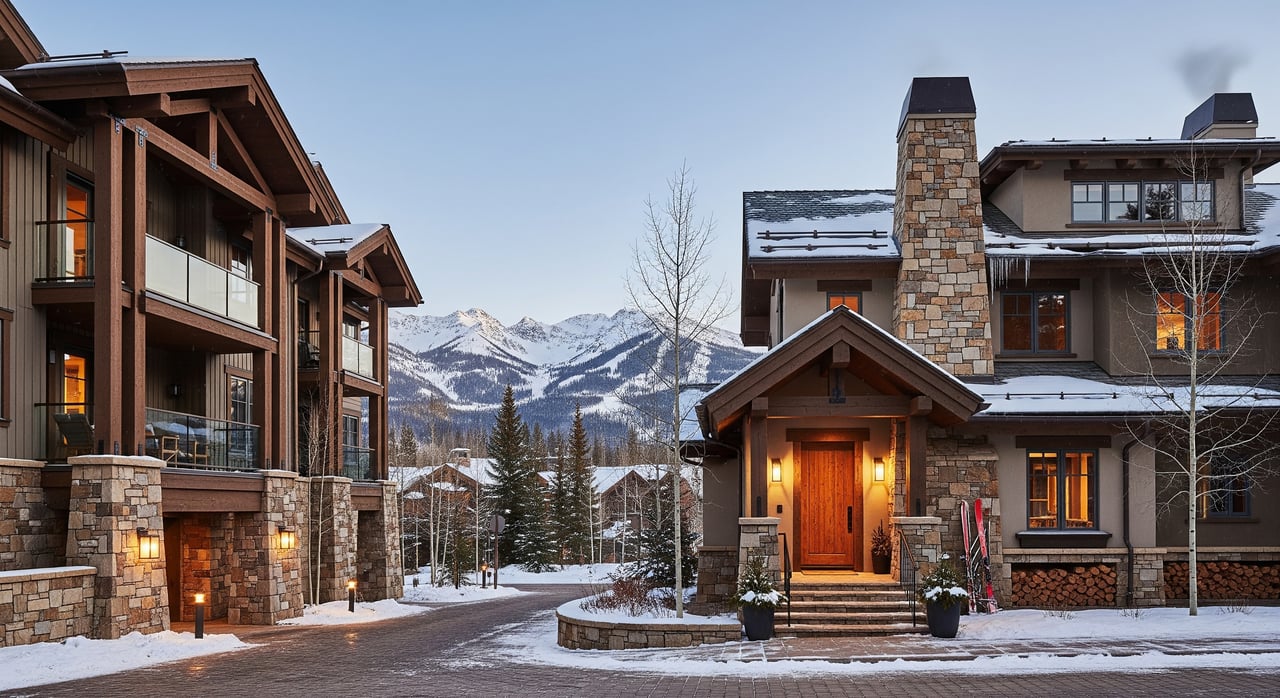
Are you torn between a condo and a townhome in Vail Village? You’re not alone. Each option offers a different mix of ownership, maintenance, rental potential, and lifestyle. In this guide, you’ll learn how the legal form, HOA structure, financing, and day-to-day realities affect your decision in Vail Village. Let’s dive in.
Condo vs townhome in Vail Village
What a condo really means
A condominium typically gives you ownership of your individual unit plus a shared interest in common elements like the lobby, roof, grounds, and amenities. The association manages those common areas under recorded documents called a condominium declaration and bylaws. In most condominiums, you handle interior finishes while the association handles exterior items and common-area costs. The exact split depends on the recorded declaration.
What a townhome can mean
Townhomes in Colorado come in two forms. Some are fee simple, where you own the structure and often the land beneath it, much like a single-family home with an HOA for shared roads or landscaping. Others look like townhomes but are legally condominiums, with common elements and limited common elements. The difference affects maintenance, taxes, insurance, and financing.
Why the legal form matters
Do not rely on marketing labels alone. Your rights and responsibilities are set by the recorded plat, declaration, and HOA covenants. These documents define what the HOA maintains, what you maintain, and how costs are allocated. Always confirm the property’s legal form early so you can align financing, insurance, and budgeting.
Maintenance and HOA responsibilities
Who handles what
In many Vail Village condos, the HOA maintains roofs, exterior walls, snow removal, and common-area utilities, while you maintain interior finishes. In fee-simple townhomes, owners often take on more exterior obligations, including roof and siding, with the HOA focusing on shared elements. The only way to be sure is to review the declaration and request a clear owner vs association responsibilities matrix for items like windows, decks, parking, and utilities.
Mountain-specific realities
Vail Village buildings face heavy snow loads, freeze-thaw cycles, and ice damming, which can stress roofs and exteriors. Elevators, heated walkways, and underground systems in the village often require disciplined reserve planning. Communities with professional management and sound reserves usually navigate these costs more smoothly. Review reserve studies, meeting minutes, and recent special assessments to gauge future exposure.
Financing, insurance, and taxes
Financing differences
Lenders underwrite condos and townhomes differently based on legal form. Condominiums often require project approval for certain loans, and lenders will look at HOA financial health, litigation, owner-occupancy levels, and reserves. Fee-simple townhomes are usually underwritten more like single-family homes, which can simplify the process. Get pre-approved and have your lender review the specific association early to avoid surprises.
Insurance basics
Condo owners typically carry an HO-6 policy covering interior finishes, personal property, and liability, while the HOA’s master policy covers common areas and often the building shell. Fee-simple townhome owners often need broader exterior coverage, closer to a single-family policy. In the mountains, consider roof costs, ice and water damage risks, and loss-assessment coverage in case of large deductibles or special assessments.
Taxes and assessments
Property taxes are set by Eagle County based on your parcel and improvements. Condos may show lower assessed values than comparable fee-simple townhomes because common elements are shared, but assessments vary by property. In resort markets, special assessments are not uncommon due to weather-related maintenance or deferred reserves. Ask for the past few years of budgets, reserve studies, and assessment history.
Short-term rentals and local rules
Two approvals you need
If nightly rentals are part of your plan, you typically need both municipal licensing and HOA approval. The Town of Vail regulates licensing, occupancy, and safety requirements. Associations may set minimum stays, cap rental units, or require owner registration. Confirm both the municipal rules and the HOA policy before you rely on projected rental income.
What affects rental income
Units that allow short-term rentals can offer strong gross revenue but may face tighter rules, competition, and higher operating costs. Lenders may scrutinize projects with high investor ratios. If you plan to rent, request historical occupancy, average daily rate trends, and a clear outline of fees and taxes remitted.
Lifestyle and resale tradeoffs
Who tends to prefer condos
If you want a lock-and-leave setup with lower exterior maintenance and access to amenities, a condo often fits better. Many buyers prioritize walkability, concierge-style services, and shared facilities. Be prepared for rules about pets, remodeling, and rentals.
Who tends to prefer townhomes
If you value privacy, direct outdoor access, garages, and more control over your exterior space, fee-simple townhomes are appealing. You may take on more maintenance responsibility, and supply within Vail Village can be limited. Some buyers prefer this path for longer-term use and primary residence needs.
Price and resale drivers
Walkability to lifts and the village core, parking, storage, on-site amenities, and views all influence value. Age and building condition matter, especially if major capital projects are looming. In a limited-inventory location like Vail Village, properties with standout features such as ski access or secure parking often command a premium and can be easier to resell.
A practical buyer checklist
- Confirm the legal form of ownership by reviewing the recorded plat and deed.
- Obtain HOA documents: declaration, bylaws, rules, budget, financials, reserve study, meeting minutes, insurance certificate, and any litigation disclosures.
- Verify short-term rental permissibility with both the Town of Vail and the HOA rental policy.
- Ask about recent and planned capital projects, plus any scheduled or likely assessments.
- Request a line-item HOA budget, reserve levels, and details on dues delinquencies.
- Confirm parking rights, guest parking, and any village permit programs.
- Check utilities, metering, and how costs are allocated across units.
- Review your insurance plan with a local agent who understands mountain risks and the HOA master policy.
- Confirm financing options with a lender experienced in resort condos and townhomes.
- Request rental history, occupancy trends, and tax remittance history if you plan STR use.
- Schedule an inspection focused on roof, flashing, heating systems, insulation, windows, and any water intrusion or ice-dam evidence.
Which is right for you
- Choose a condo if you want low exterior maintenance, amenities, and a lock-and-leave lifestyle. This is common for second-home owners seeking simplicity and potential rental flexibility.
- Choose a fee-simple townhome if you want more privacy, a garage, and control over your space, and you are comfortable taking on more maintenance items.
- When in doubt, let the legal form and HOA documents guide you. The recorded declaration decides who pays for what and how your property operates day to day.
How we help you decide
You deserve a clear path and a calm, expert partner. I help you analyze the legal form, HOA health, reserve studies, and insurance coverage, and I coordinate with lenders and local property managers so your financing and rental plans align. I will source comparable sales, clarify maintenance responsibilities, and surface any red flags before you make an offer. If you want a private, no-pressure consultation about condo versus townhome options in Vail Village, connect with Gardner & Gardner Resort Real Estate.
FAQs
What is the legal difference between a condo and a townhome in Vail Village
- A condo owner typically owns the unit interior plus a shared interest in common elements, while a fee-simple townhome owner often owns the structure and land under it; always confirm the recorded declaration and plat.
Which is usually easier to finance in Vail Village
- Fee-simple townhomes are often underwritten like single-family homes, while condos may require project approval and deeper HOA review by the lender.
Can I rent my Vail Village property nightly
- You need both municipal licensing from the Town of Vail and HOA approval, and rules like minimum stays or registration can apply.
How do HOA dues and maintenance differ between condos and townhomes
- Condo HOAs often cover exterior and common areas, while fee-simple townhome owners take on more exterior items; the specific split depends on the declaration and budget.
What insurance policy do I need for a condo or townhome in the mountains
- Condo owners typically carry an HO-6 policy for interior finishes and liability, while fee-simple townhome owners often need broader exterior coverage similar to a single-family policy.
What are common hidden costs for Vail Village properties
- Watch for special assessments tied to roof, exterior, elevator, or snow-related repairs, and confirm reserve health, insurance deductibles, and utility allocation.
How do lifestyle and resale differ between condos and townhomes in Vail Village
- Condos offer low-maintenance convenience and amenities, while townhomes provide more privacy and control; in both cases, walkability, parking, views, and condition drive resale appeal.